Beyond VMS: Why Surveillance Needs Intelligence, Not Just Video

India’s rapid push toward smart cities is driving large-scale surveillance across workplaces, transit systems, campuses, and urban spaces.
Most of these systems are still built around a simple model: record video, store it, and review footage after an incident occurs. This approach was workable when deployments were limited in size and scope. It does not scale anymore.
As surveillance becomes city-wide and mission-critical, video alone is no longer sufficient. What organisations now require is real-time awareness and intelligence, not more stored footage.

Why Traditional VMS Falls Short at Scale
Traditional VMS platforms are designed primarily for video management. They are effective at recording, indexing, and replaying footage. But as surveillance deployments expand across campuses, cities, and large public environments, this model begins to break down.
These systems depend heavily on continuous network connectivity and human operators watching screens. Most action still happens after an incident, not during it. Real-time decision-making is constrained by network latency, bandwidth availability, and the practical limits of moving large volumes of video across infrastructure.
There is also no inherent understanding of who a person is, whether they have been seen before, or how they move across multiple cameras and locations. Context is lost between feeds, and insight is fragmented.
At the same time, VMS-centric deployments generate enormous volumes of video that are rarely reviewed, while increasing privacy and compliance risks through long-term storage and repeated access.
In large, distributed environments, this combination of infrastructure dependency, latency, and manual intervention leads to operational fatigue rather than operational clarity reinforcing why surveillance must move beyond VMS toward intelligence.
The Shift from Video to Intelligence
Surveillance needs to move beyond simply watching video to understanding what is happening in real time.
An intelligence layer sits above the existing VMS stack, consuming live camera feeds without replacing the underlying video infrastructure. Instead of treating video as footage to be reviewed later, this layer continuously interprets activity as it unfolds.
The focus shifts from raw video to context who is present, whether they have been seen before, how movement spans multiple cameras, and where attention is required. Insights are generated in real time, not after an incident.
As a result, teams gain situational awareness during the event, not after it. This single shift fundamentally changes how surveillance is used operationally - from reactive investigation to proactive awareness.
What Intelligence-First Surveillance Changes
When surveillance is designed around intelligence instead of storage, the nature of the system changes.
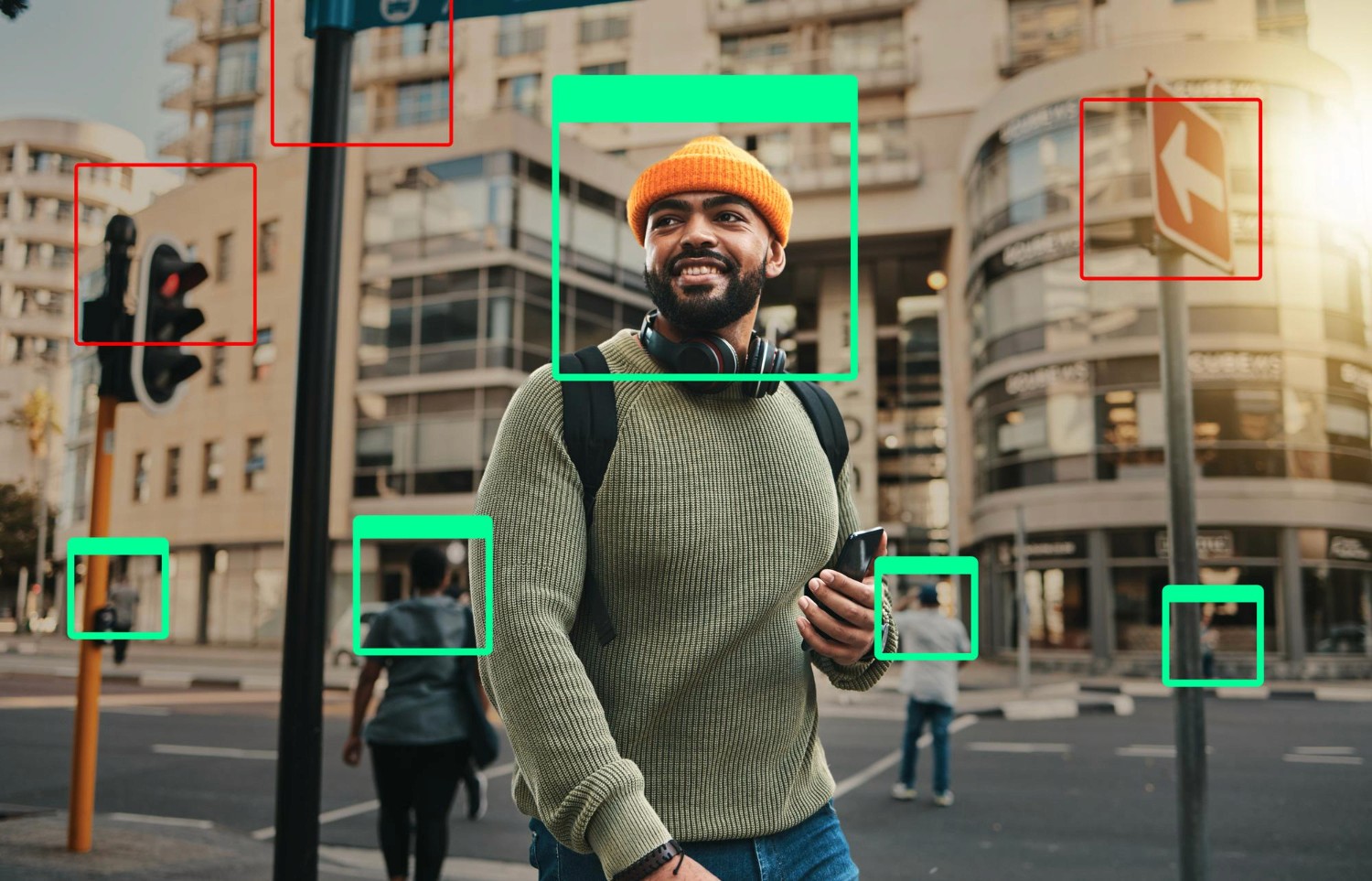
People are treated as continuous entities across cameras, locations, and time not just as moving objects in isolated frames. The system can distinguish between registered individuals, visitors, and frequent visitors without depending on external databases or manual tagging.
All real-time processing happens on-prem, eliminating cloud dependency and third-party data sharing. Alerts are generated automatically based on context, removing the need for constant screen monitoring by operators. Existing cameras and VMS setups remain in place, avoiding any rip-and-replace.
Privacy is enforced through system design rather than operational discipline. The intelligence layer runs quietly in the background, producing signals only when attention is required.
What This Means Operationally
In real-world deployments, this shift translates into tangible operational outcomes.
Manual screen monitoring is significantly reduced, lowering day-to-day operational overhead. Alerts are generated in real time, enabling faster response when attention is actually required. Instead of isolated camera feeds, teams get a single, unified operational view across locations.
Because processing happens on-prem, organisations retain full ownership of both video and identity data. At the same time, coverage can scale across more cameras and sites without a proportional increase in manpower.
Surveillance moves away from being a purely reactive function and becomes an active operational layer supporting day-to-day decision-making.
Where This Approach Matters Most
This approach matters most in environments where systems are expected to work continuously and decisions cannot be delayed.
Government offices, enterprise campuses, transport hubs, industrial facilities, and large public events fall into this category. These are places where reliability, accountability, and privacy are basic requirements, not optional features.
In such environments, storing more video does not improve outcomes. What matters is knowing what is happening, when it is happening.
Where Surveillance Is Headed
Surveillance is moving away from recording everything and reviewing footage later.
The focus is shifting towards understanding people, movement, and risk in real time, on-prem, and at scale. Systems will be judged less by how much video they store and more by how quickly they can surface usable information.
The next phase of surveillance infrastructure will be driven by intelligence ownership and response time. It will move beyond VMS and towards intelligence as the core layer.

Written by
Rajesh Kandlagunta
Co-Founder & CEO, FaceIntel Technologies Pvt. Ltd.
February 5, 2026
15 min read
FaceIntel Discovery Pilot Program
Collaborate with FaceIntel to validate identity intelligence in live, production environments — built for scale and compliance.